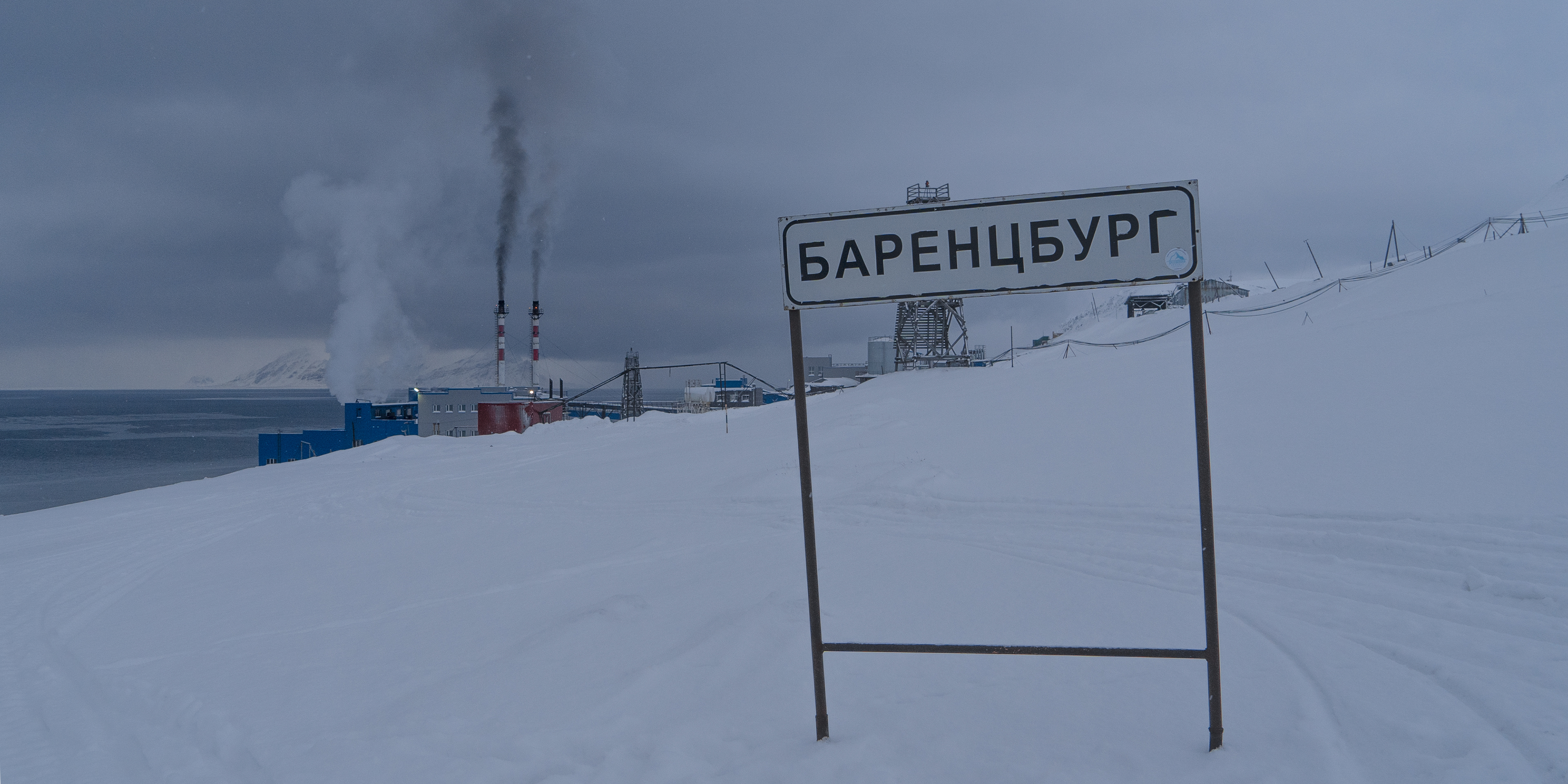
After a three hour snowmobile journey from Longyearbyen, the Norwegian capital of Svalbard, we arrive in Barentsburg - the mining town owned by ArktikUgol - Arctic Coal, a Russian mining company, making full use of the Svalbard Treaty, a 1920 agreement, giving resource rights to signatory nations. Behind the Cyrillic sign - the last operational coal facility on the entire archipelago of Svalbard.
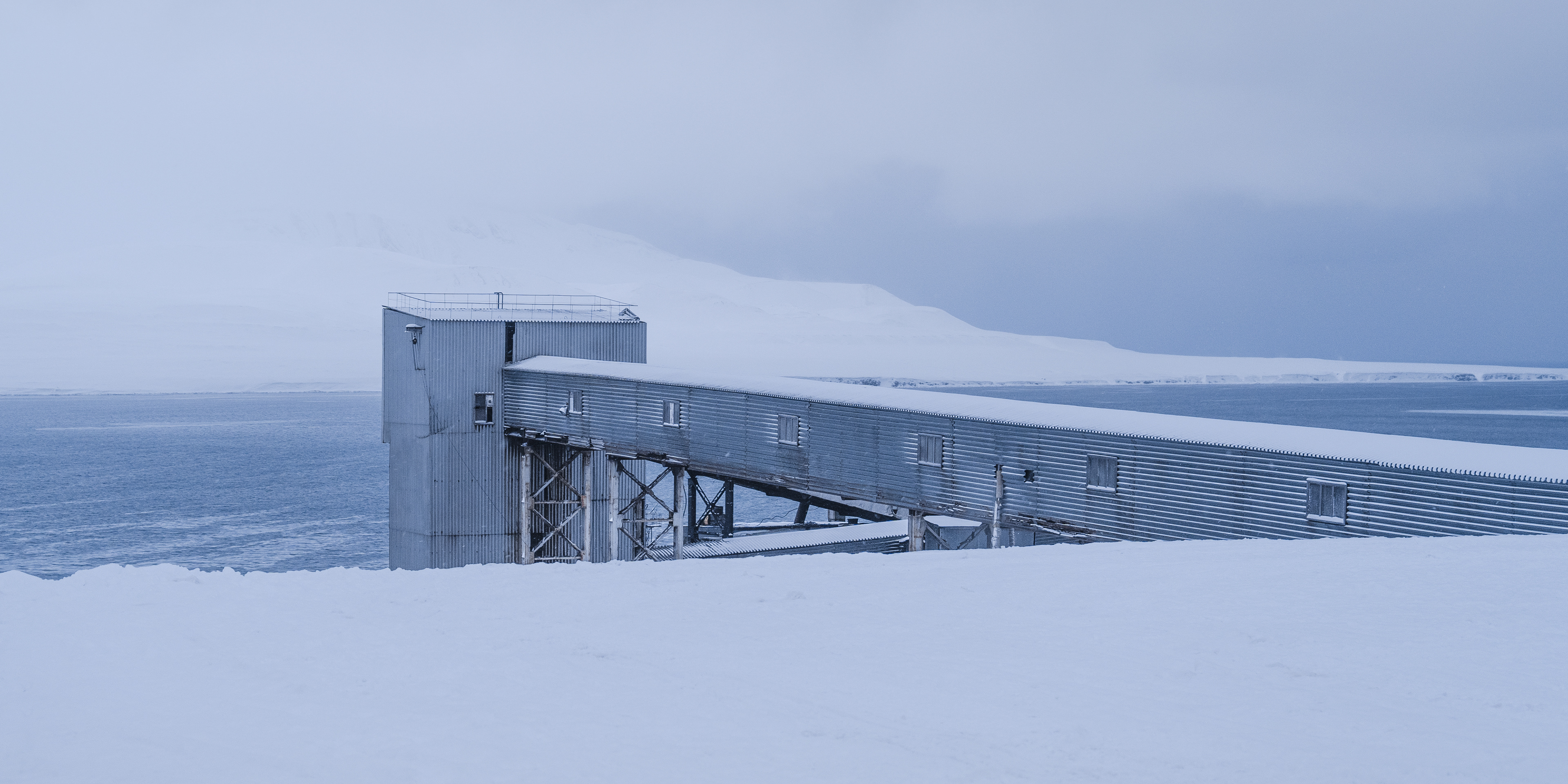
Barentsburg's coal escalator, transporting low-grade coal to the harbour. Russia's right to stay on Svalbard depends on its production of coal, as outlined in the 1920 Treaty, and reserves are expected to last for a few more years. Behind, the frigid arctic landscape is illuminated by the dissipated light of the polar night - the first sunrise is still weeks away.
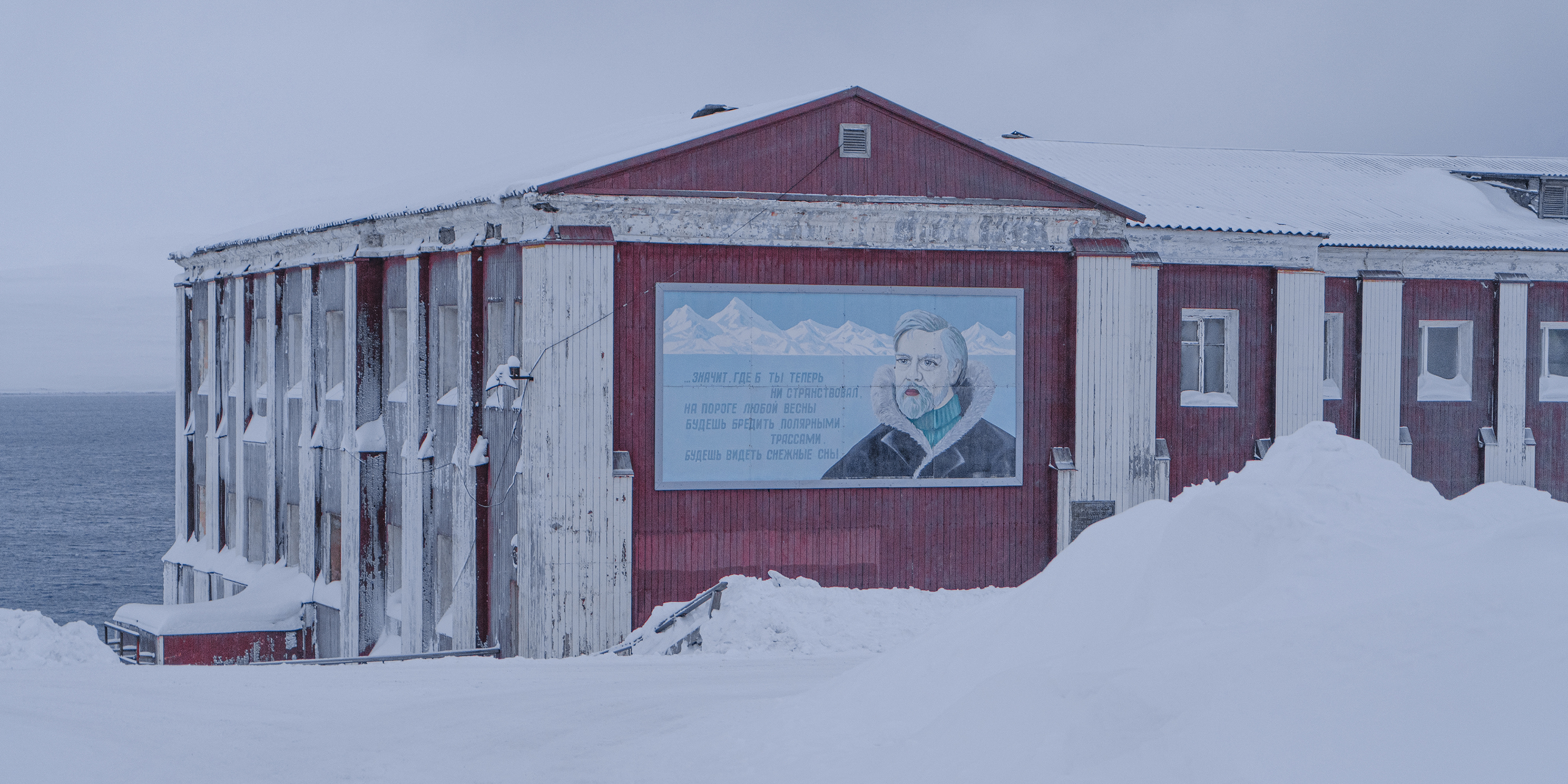
On the edge of this semi-abandoned building in Barentsburg is an extract of a poem by Soviet Marine Alexey Achair, titled 'Arctic Illness'. It describes the strong connection one retains to the Arctic upon returning home, and is no doubt a feeling many of the miners experience; life on Svalbard is isolated and harsh, but impressively beautiful at times.
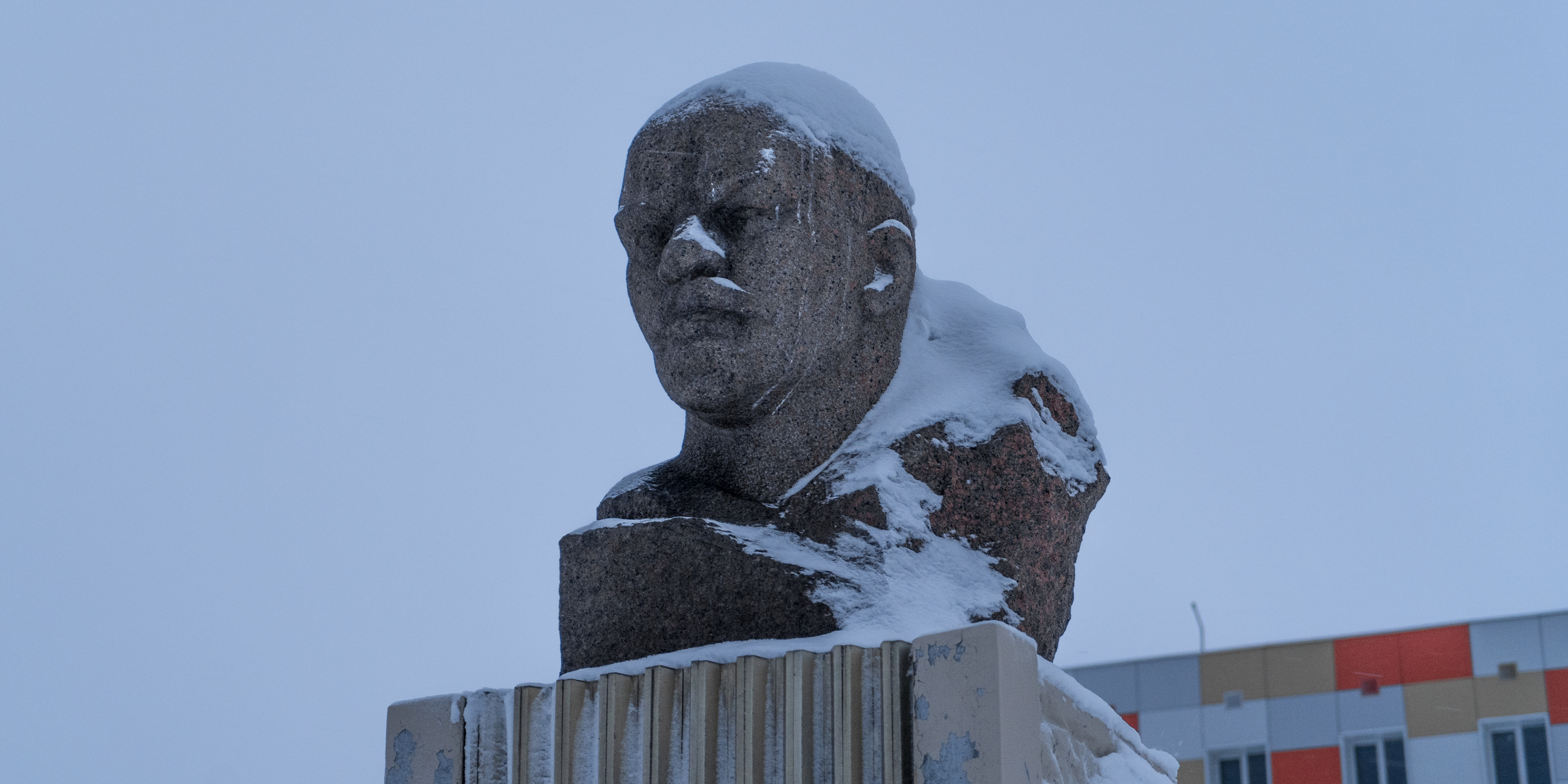
A side portrait of the world's second Northern-most bust of Lenin. Almost four decades after the collapse of the Soviet Union, Lenin still watches over - especially in geopolitically important areas like Barentsburg, and its sister town, Pyramiden, deeper in the Svalbard archipelago.
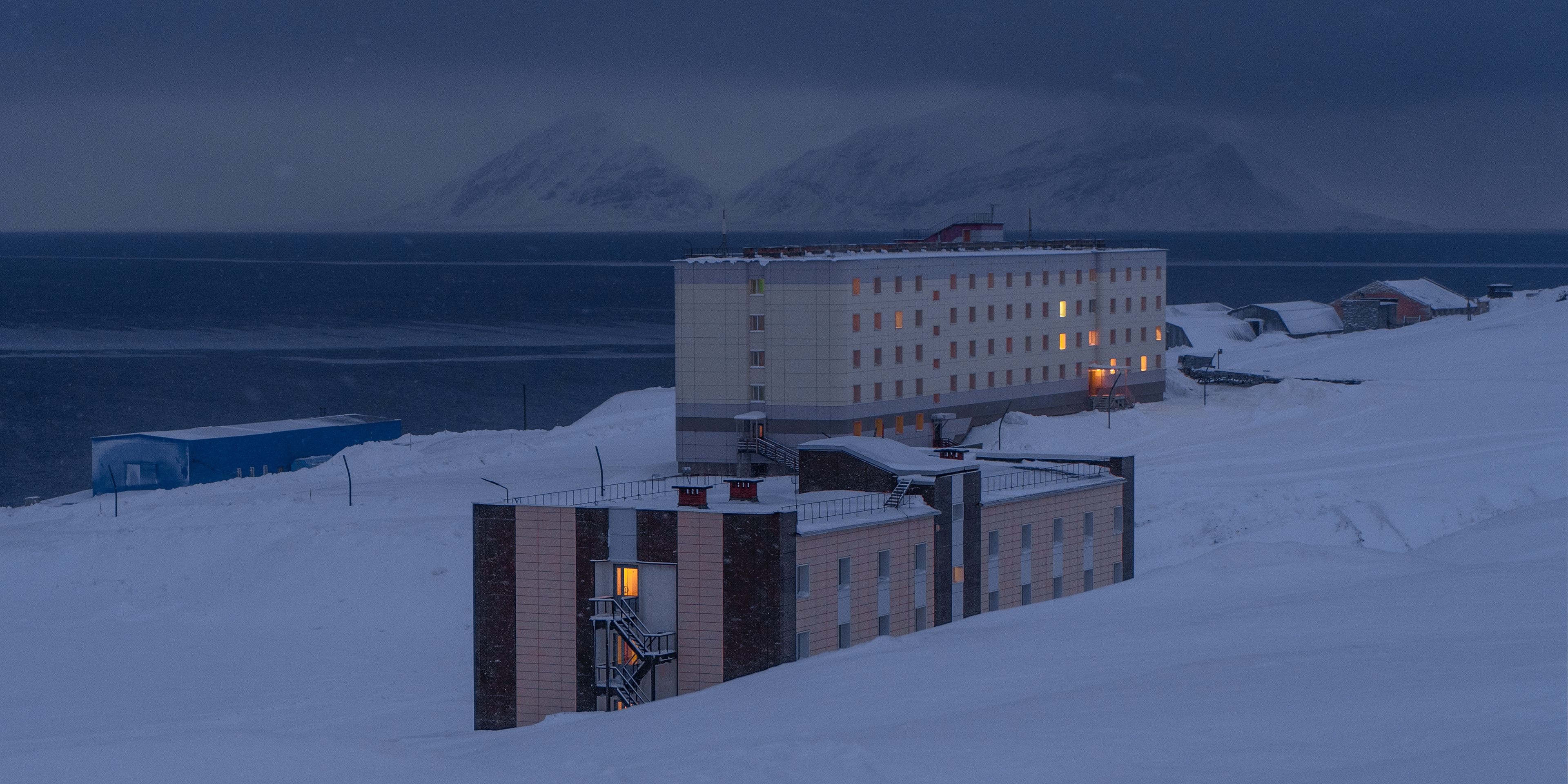
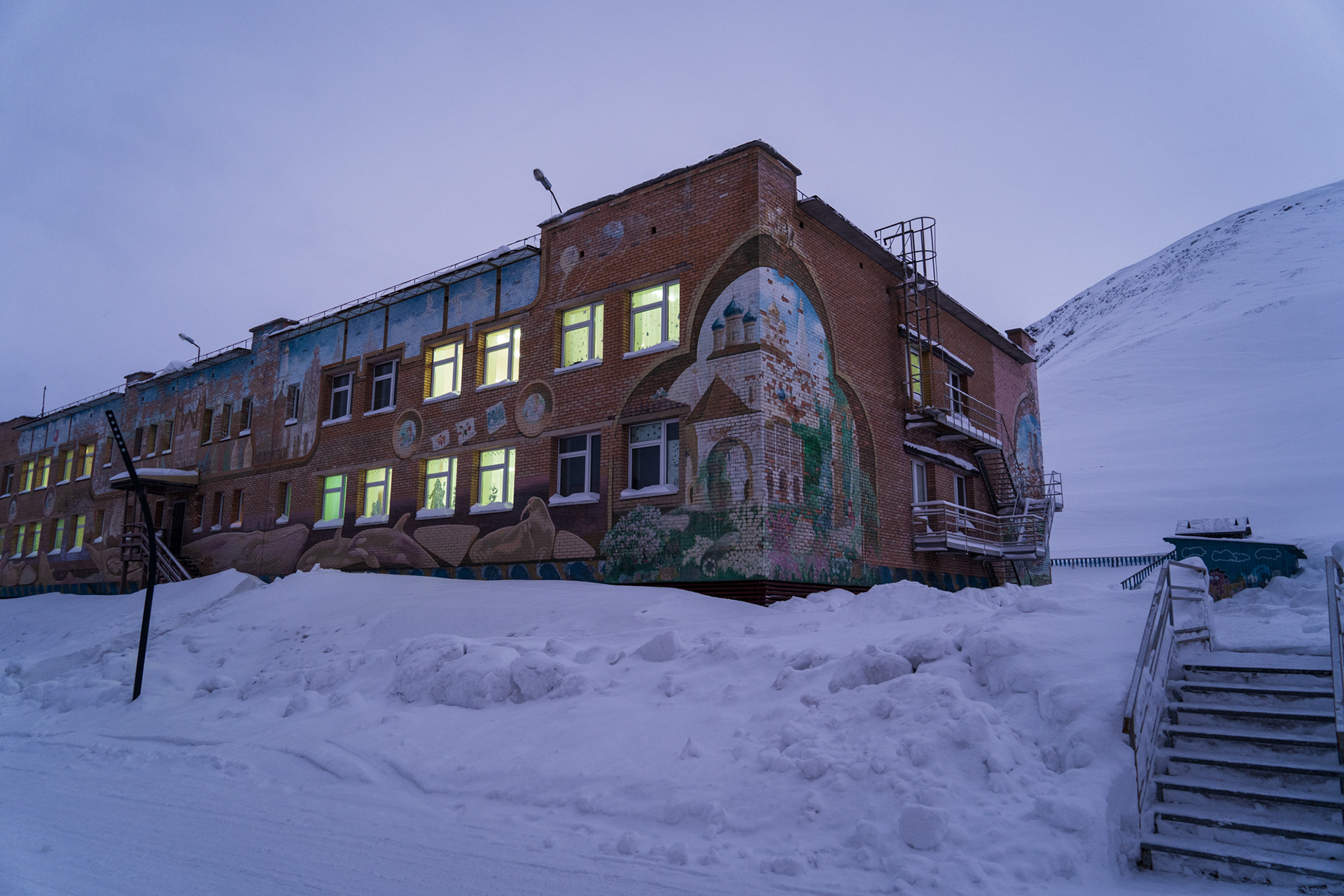
The 300 Russian and Ukrainian miners live in buildings that look no different to those on the Russian mainland. Thick insulated walls, covered in replaceable panels, and rounded corners, serve to mitigate the harsh winter environments the High Arctic archipelago experiences for much of the year.
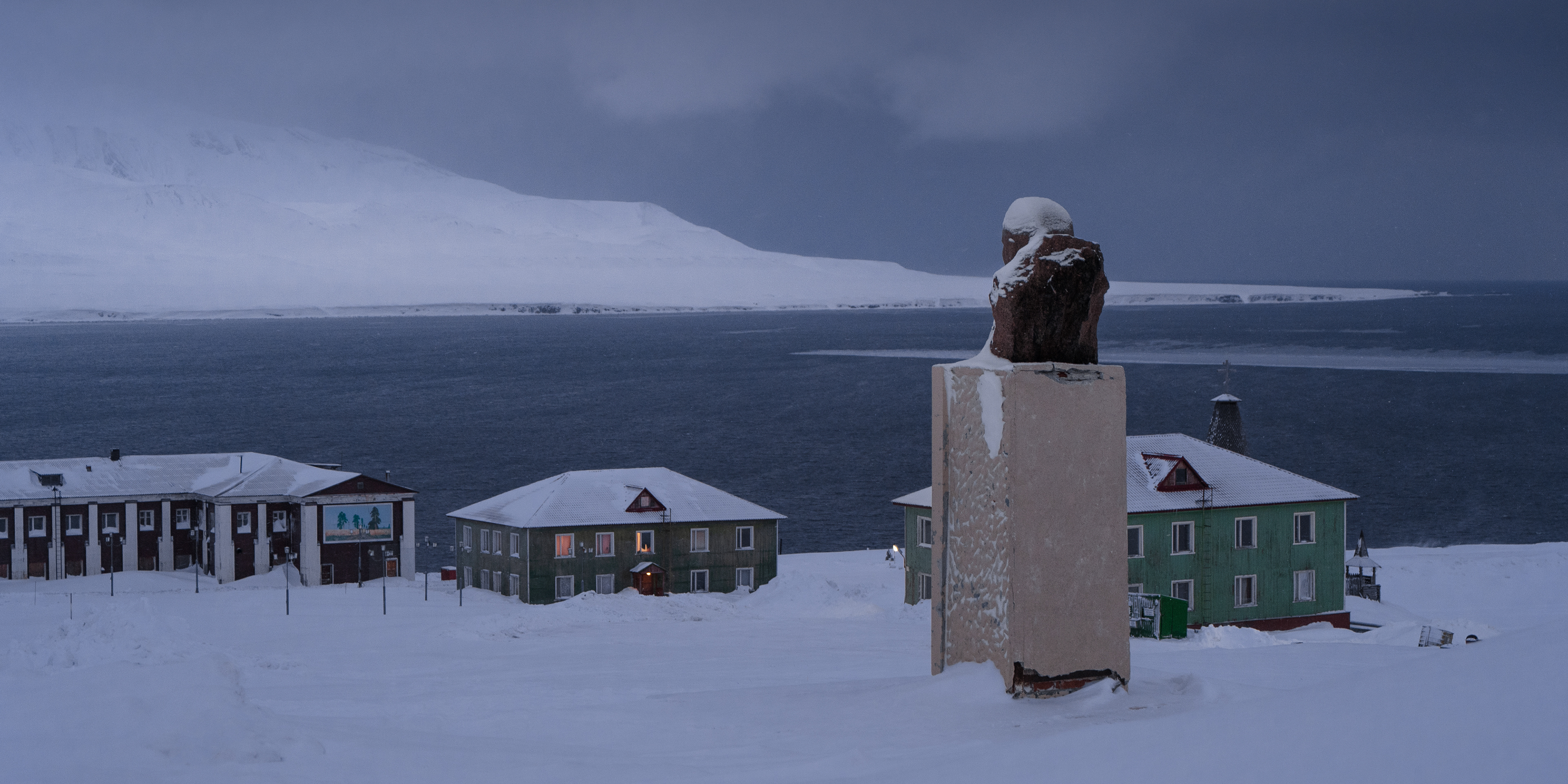
A bust of Lenin watches over the coal-mining town of Barentsburg, the frigid Arctic Ocean, and the barren landscape further out. This image exemplifies the purpose of this series - a difficult life for miners in remote lands, and a political status apparatus for Russia.
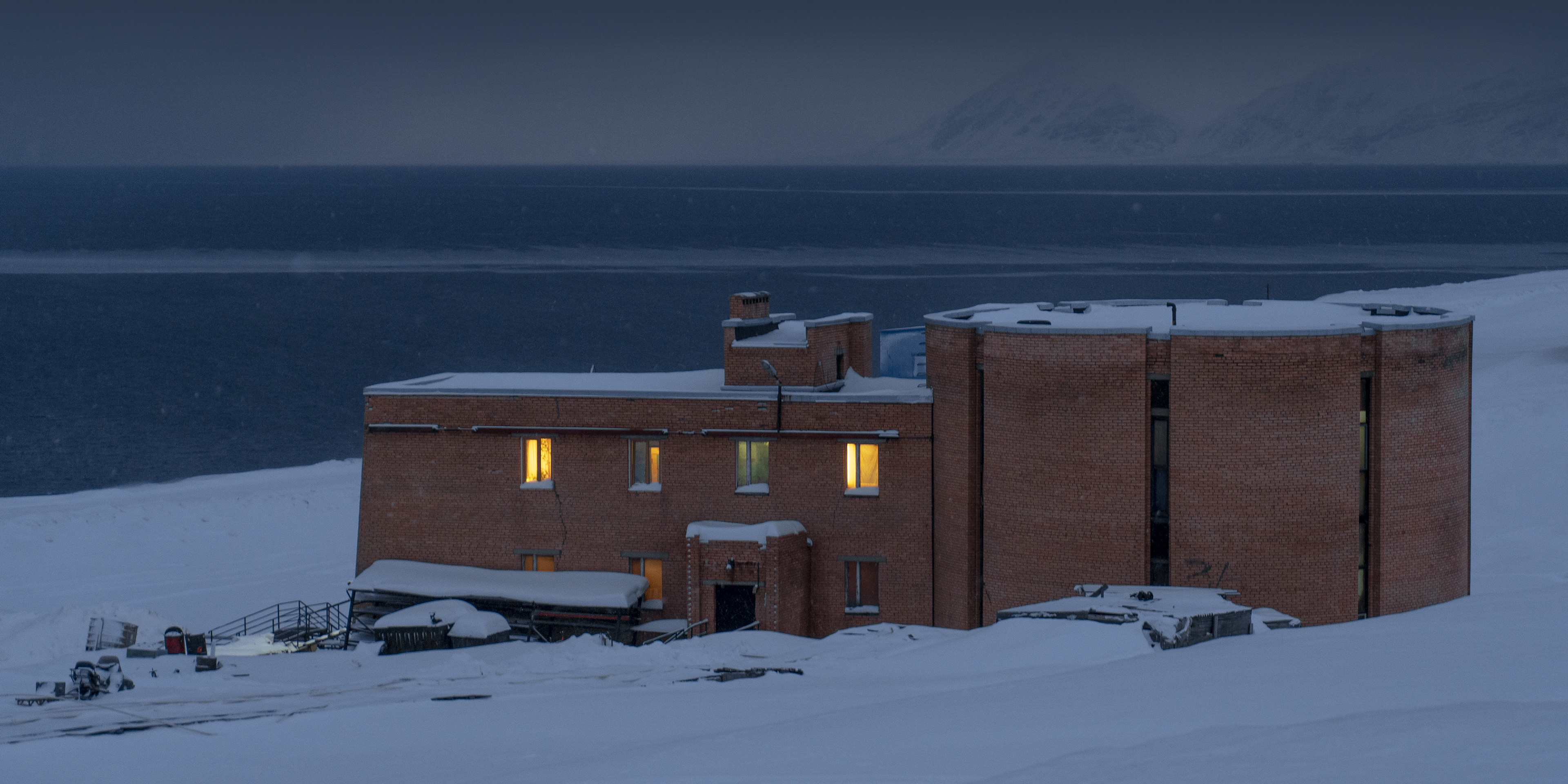
The Cartography Mapping building in Barentsburg against a backdrop of the desolate landscapes of the Svalbard archipelago. This building is an important element of Barentsburg's mining operations, and therefore to Arcticugol's and Russia's entire claim to operate on the Norwegian territory.
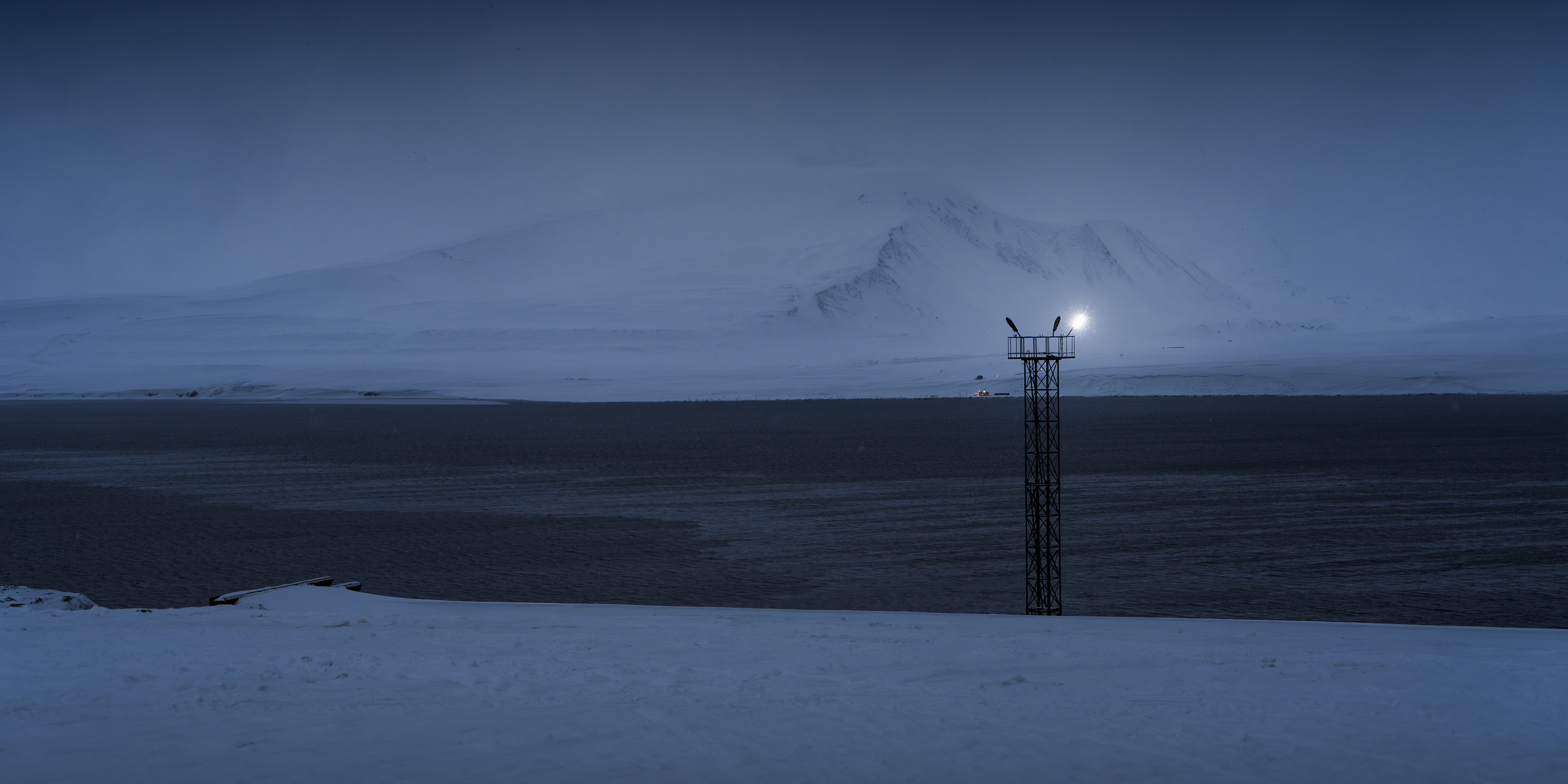
Taken weeks before the first glimpse of the sun rising above the horizon, this series was a challenge to shoot hand-held; operating within the limited light hours, -20c temperatures, and a frozen tripod required fast and deliberate action. This photo, on the edge of Barentsburg and an inlet of the Arctic Ocean, became one of my favourites from this visit.
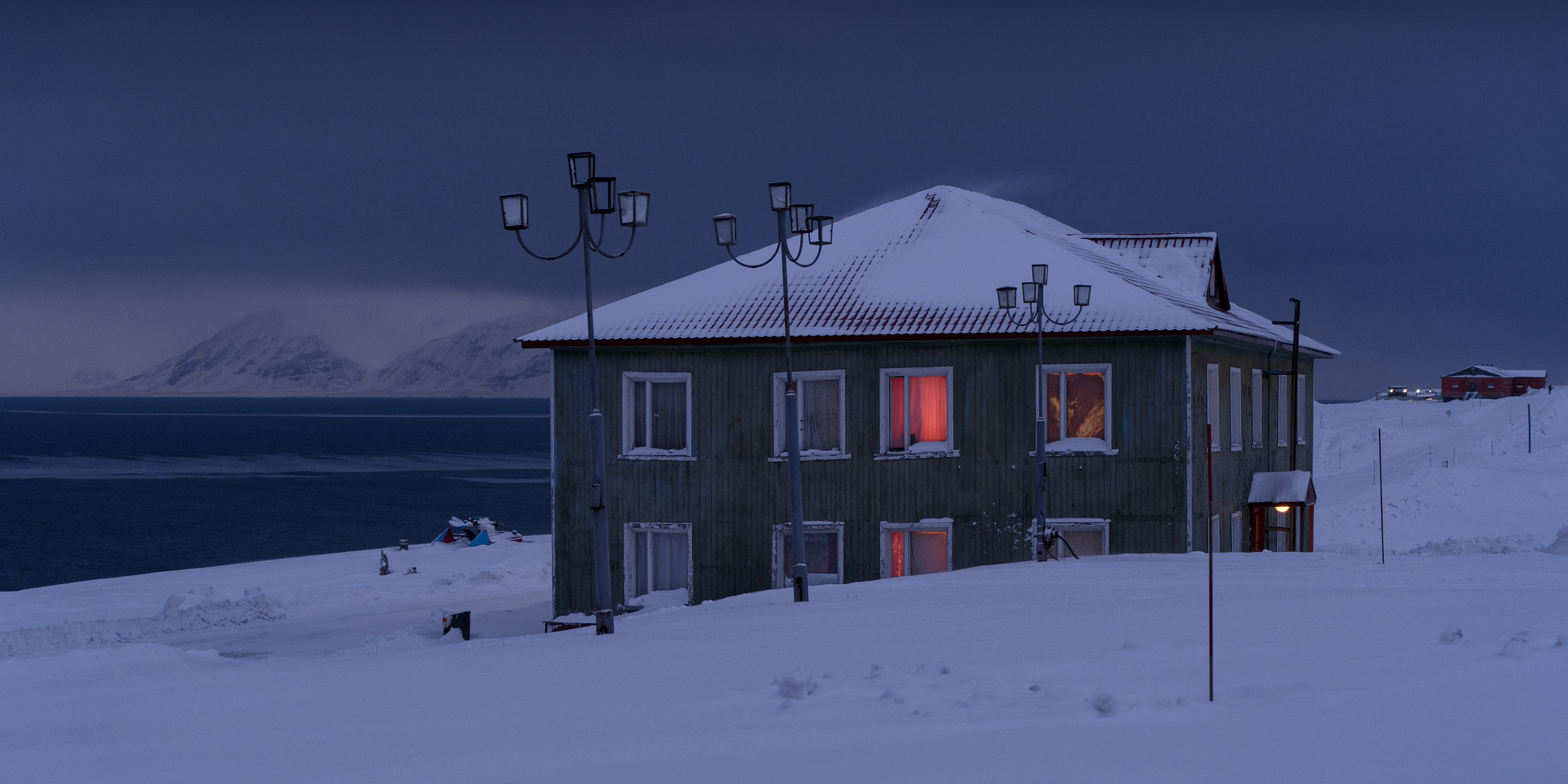
A warm, cozy light emerges from this old wooden building - one of the first residences built almost a century ago for the coal miners of Barentsburg. Many generations of Russian and Ukrainian miners have called it home, whilst staying for a season, or several, in search of better salaries than their homelands might otherwise provide.