Longyearbyen's coal power plant, which has provided the town with heating and electricity for forty years using the locally-mined coal, finally shut down in 2023, as part of a wider move to transition Longyearbyen into a greener, future, relying on more sustainable energy sources, and from a mining industry, into one of science research and considerate arctic tourism.
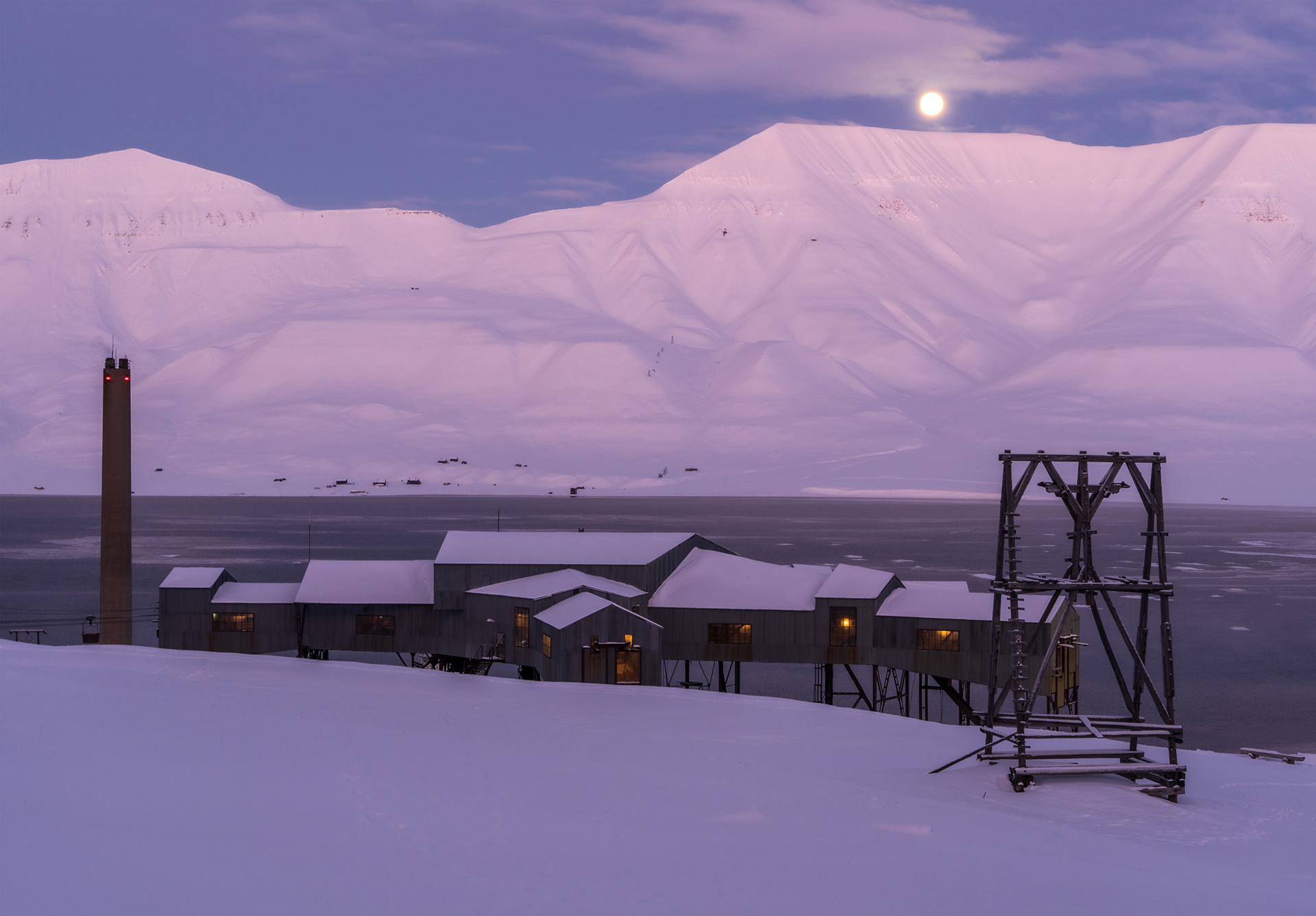
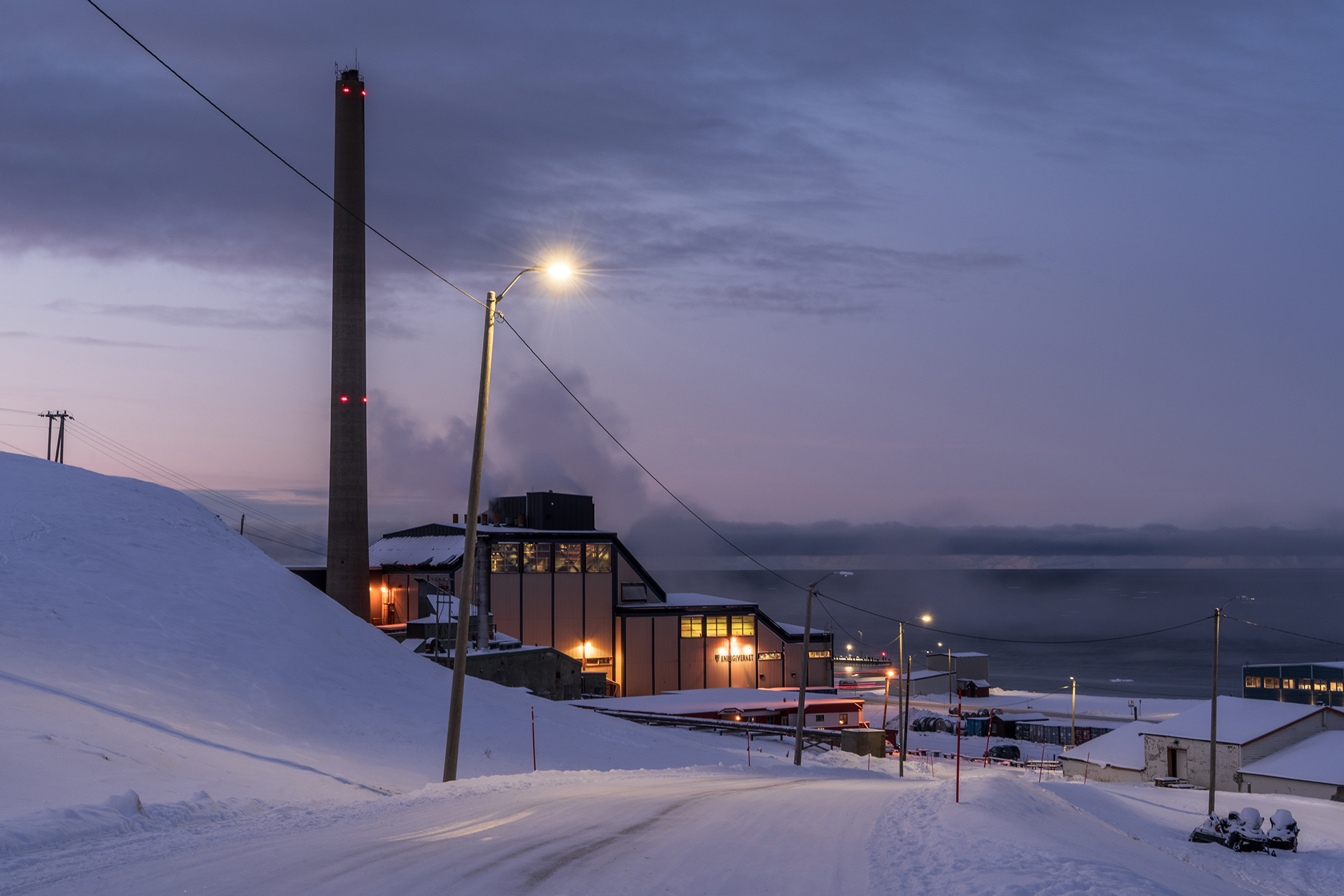
Of this entire series, this image has captured what I believe to be the essence of Longyearbyen's past: the chimney of the coal power plant, fuelled by coal that has travelled for kilometres through the landscape on cable cars, terminating in the cable car station, all set against a backdrop of pristine, snow-blanketed arctic mountains and soft pastel skies.
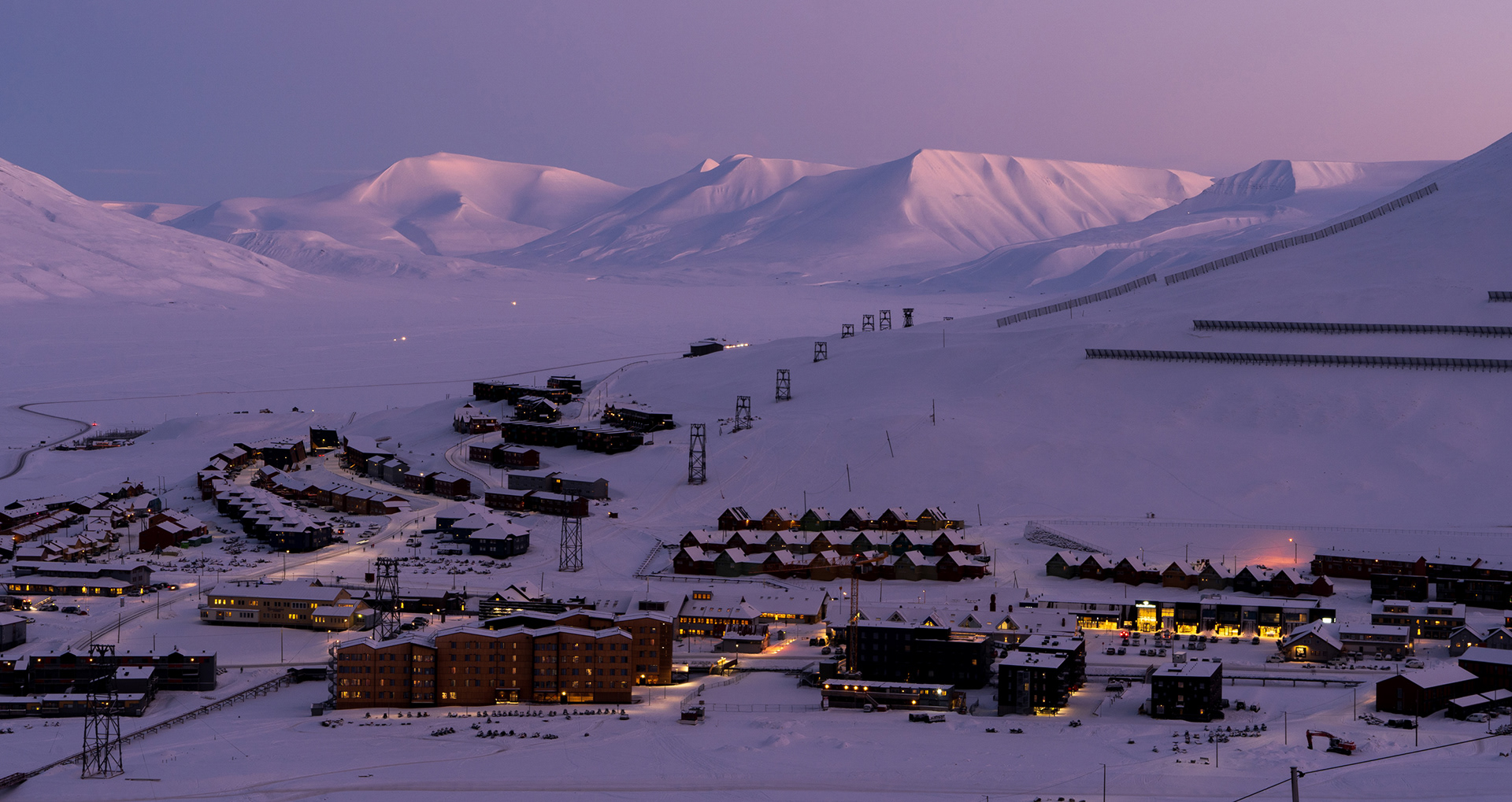
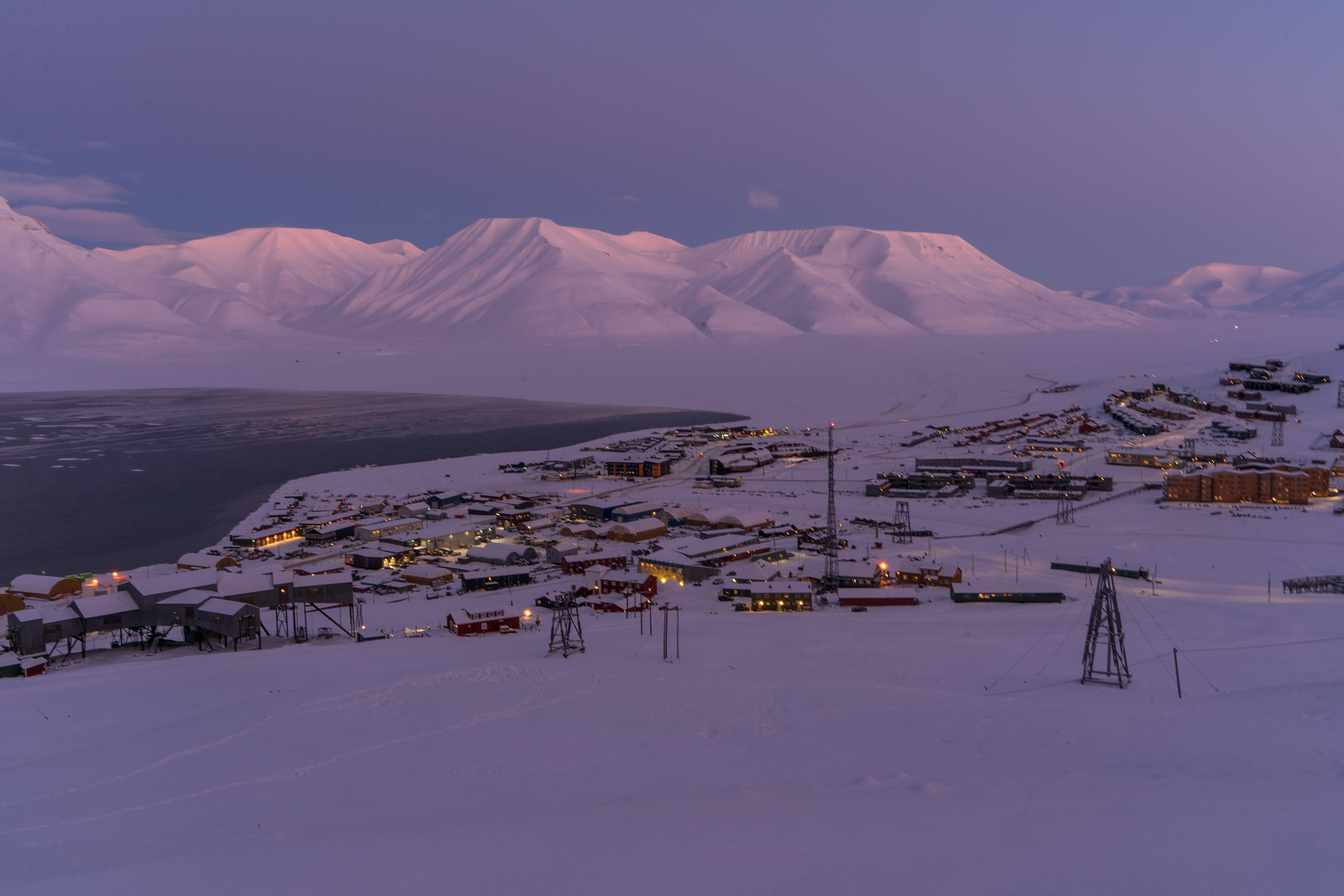
This image was taken from a hill on the edge of Longyearbyen, offering a superb view of the entire town of just over 2000 residents, the snow-blanketed Arctic valleys surrounding it, and the now-decommissioned mining infrastructure that spreads through the landscape in all directions.
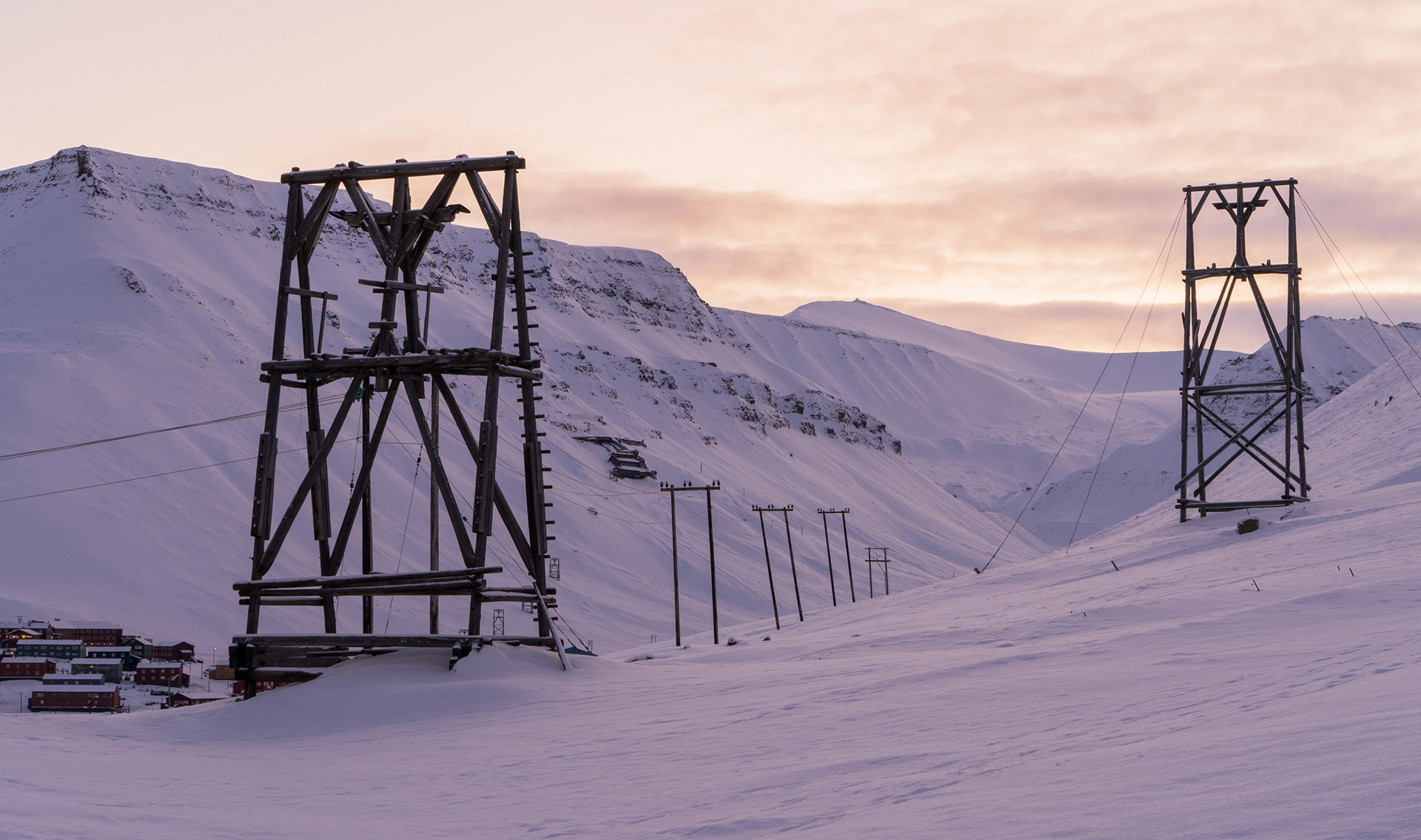
The mines immediately surrounding Longyearbyen were connected to the central processing hub via cable cars, requiring the construction of hundreds of wooden towers. The towers here lead up to Mine 1A and Mine 2B, the latter of which is seen here half-way up the mountain, just above Nybyen - New Town - in the southern end of the valley.
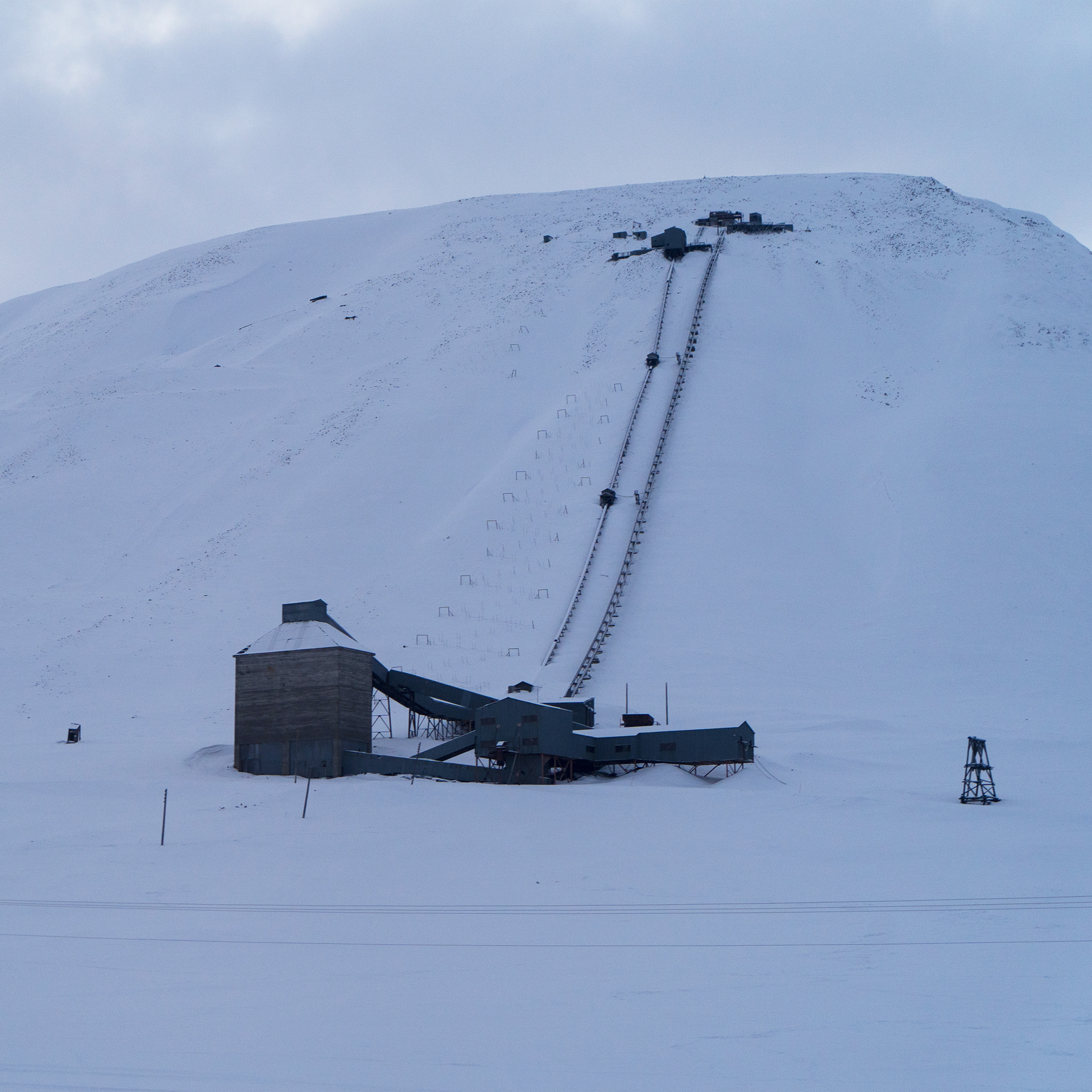
This image shows the scale of intervention on the landscape required to mine the coal deposits, which were often found high, and deep in the mountains. Although necessary for the industry, the mining infrastructure has left a permanent mark on the landscape, which is now partially preserved for tourism.
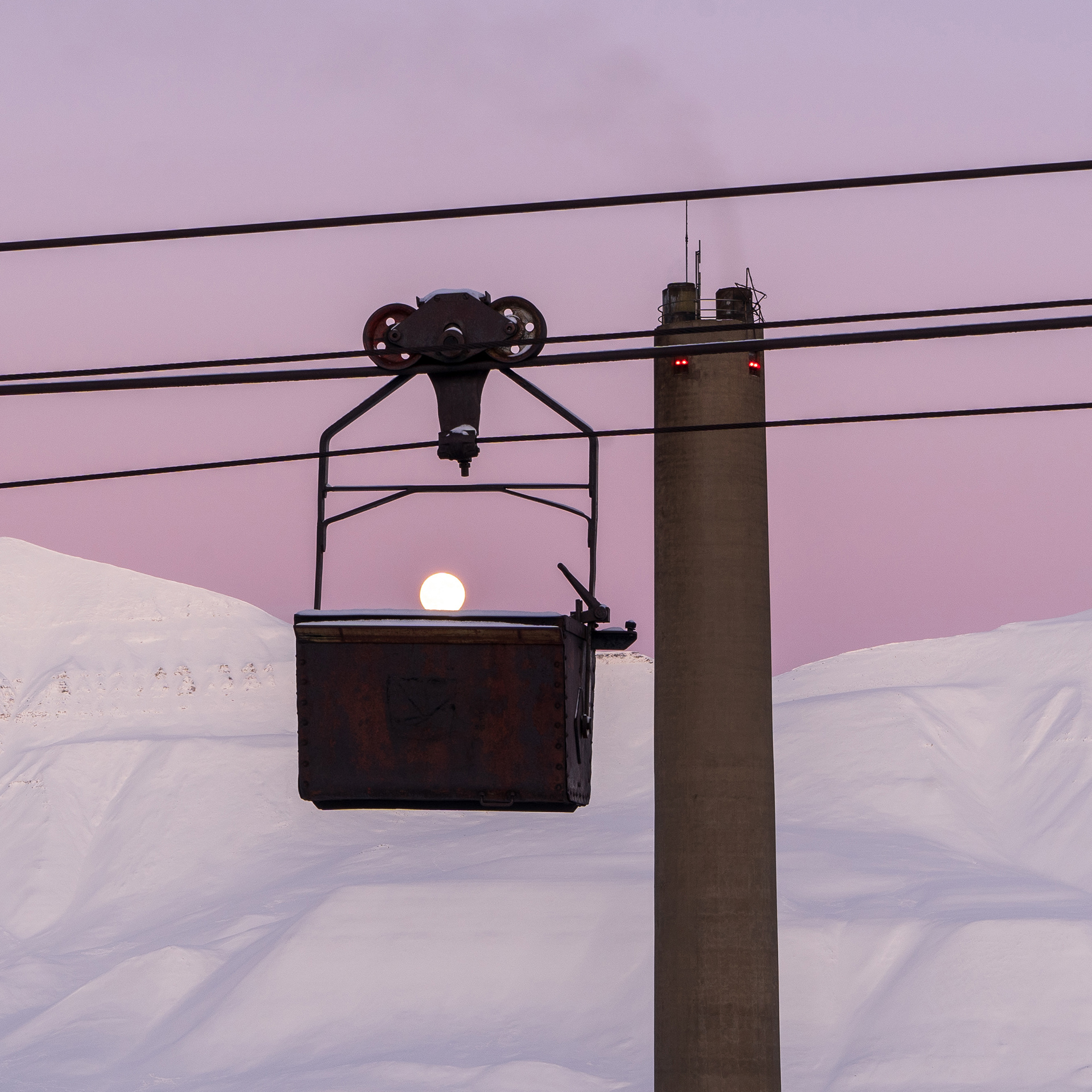
On Longyearbyen's western edge, one small section of the cable car network has retained its distinct elements - the carts, free from coal for nearly 40 years, and the cables, which have been removed elsewhere for safety reasons. Now a tourist destination, it's clear the people of Longyearbyen wish to preserve these moments as the town enters its new era of sustainable activity.
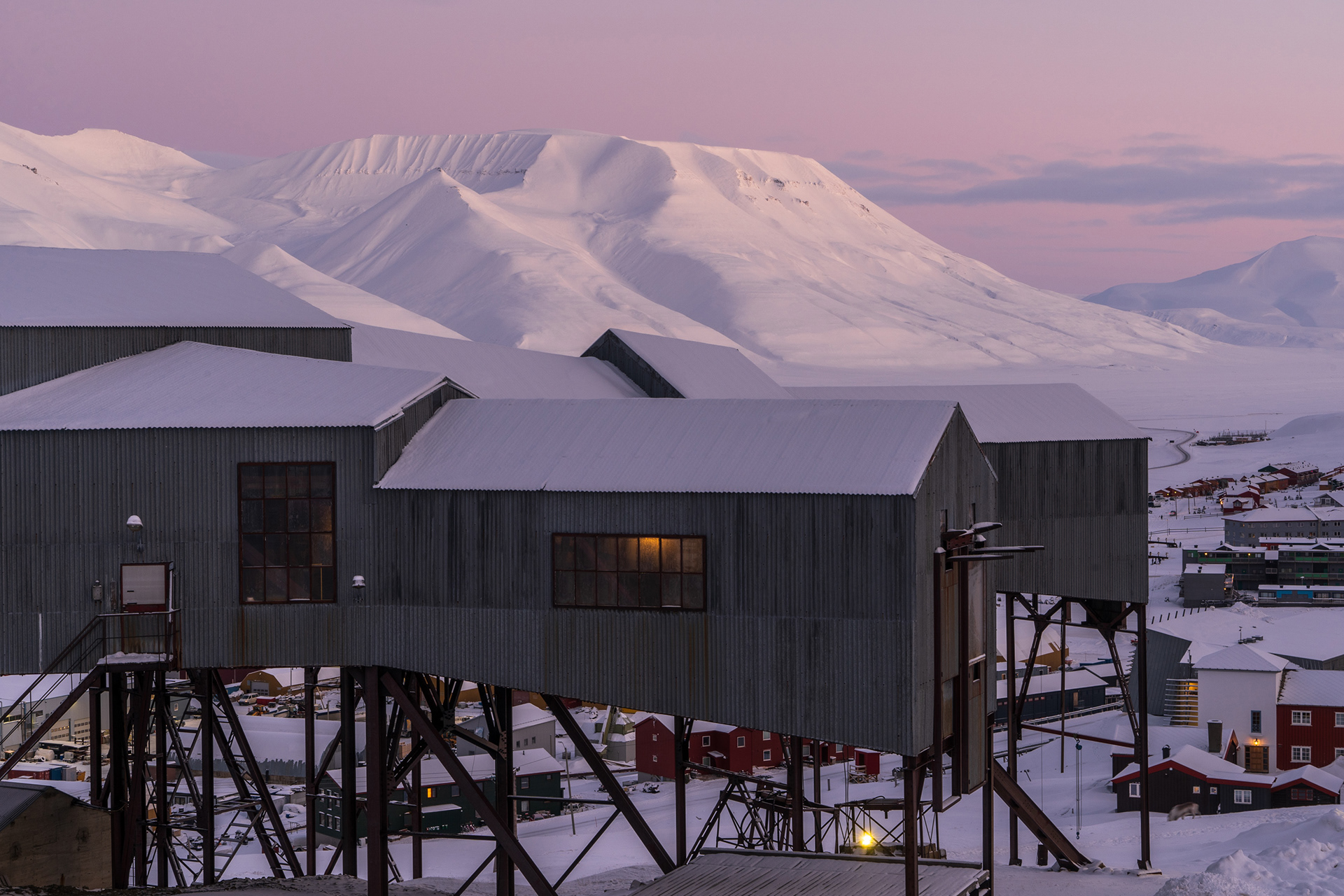
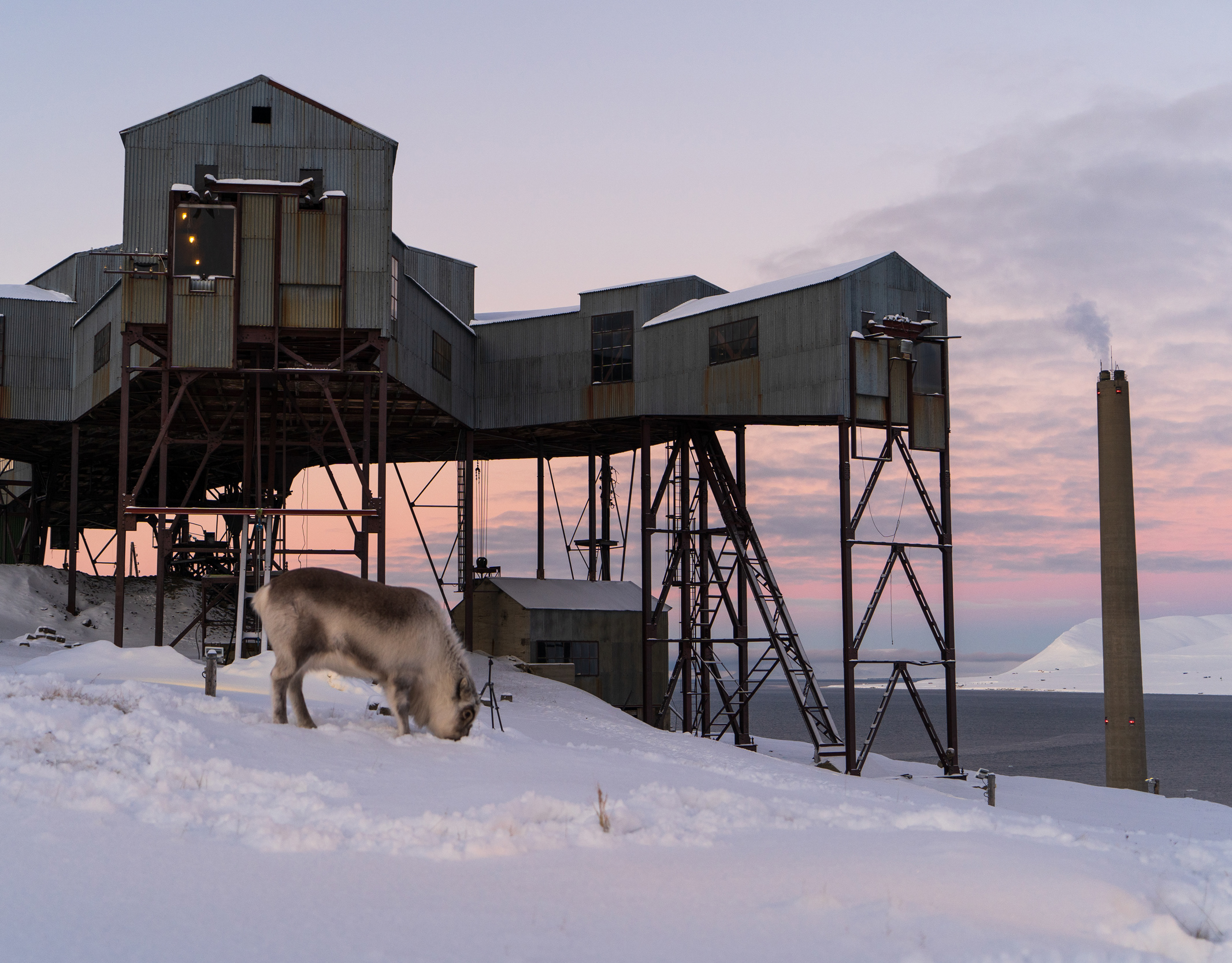
The Cable Car Centre, decommissioned in 1987, sits elevated above Longyearbyen, visible from all corners. A beloved relic of the coal era, its eccentric form points towards the now-abandoned mines dotted around this arctic landscape. I spent hours admiring it from all corners, under the pink skies of the last days of the 4 month long polar night.
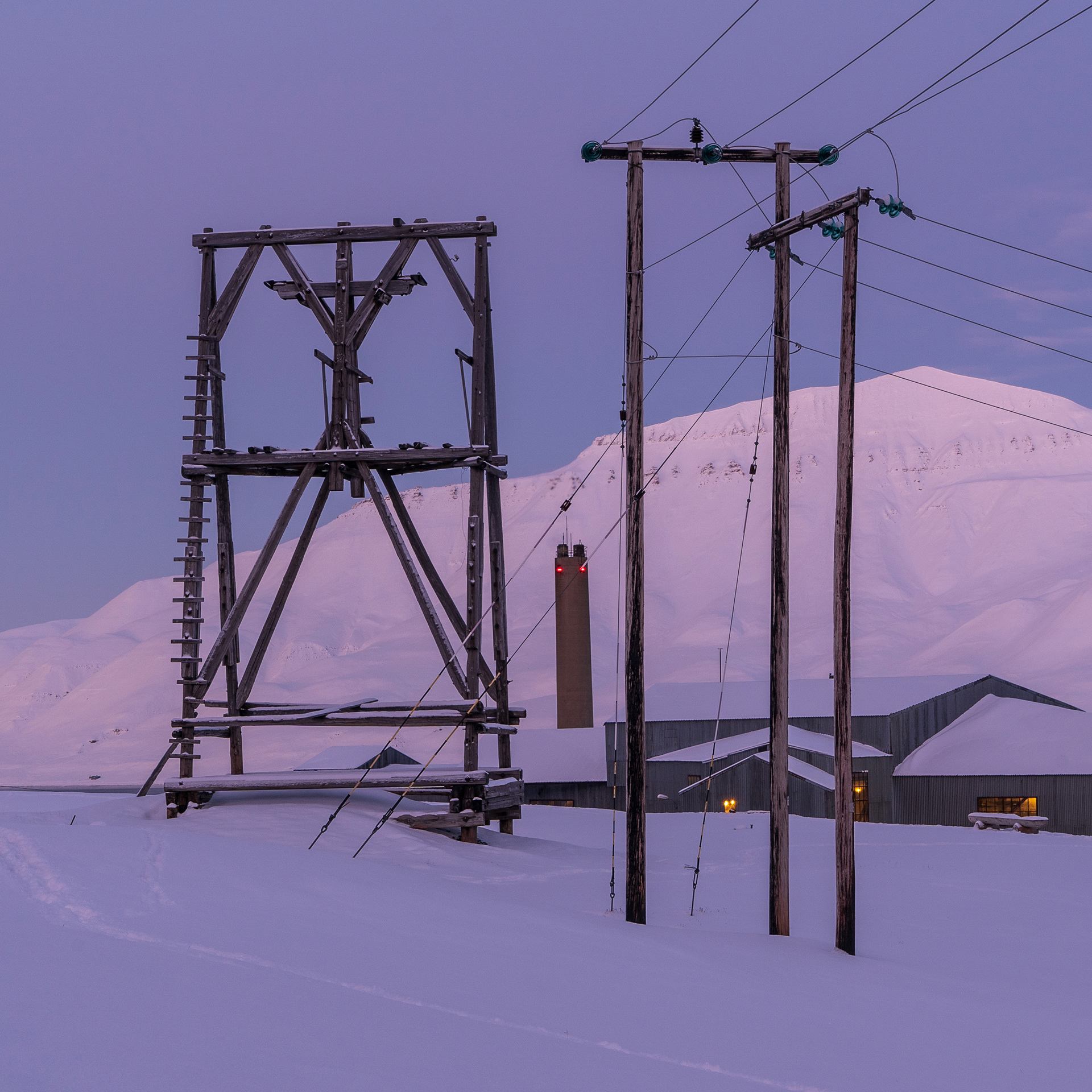
As the sky started to darken, I made my way back down to Longyearbyen - the Cable Car Centre slowly dropped out of sight; just a thin band of its steel sides remained, underneath its snow-covered top, blending with the snowy mountains in the back. Completing the scene are the electricity pylons and decommissioned infrastructure they once relied on.
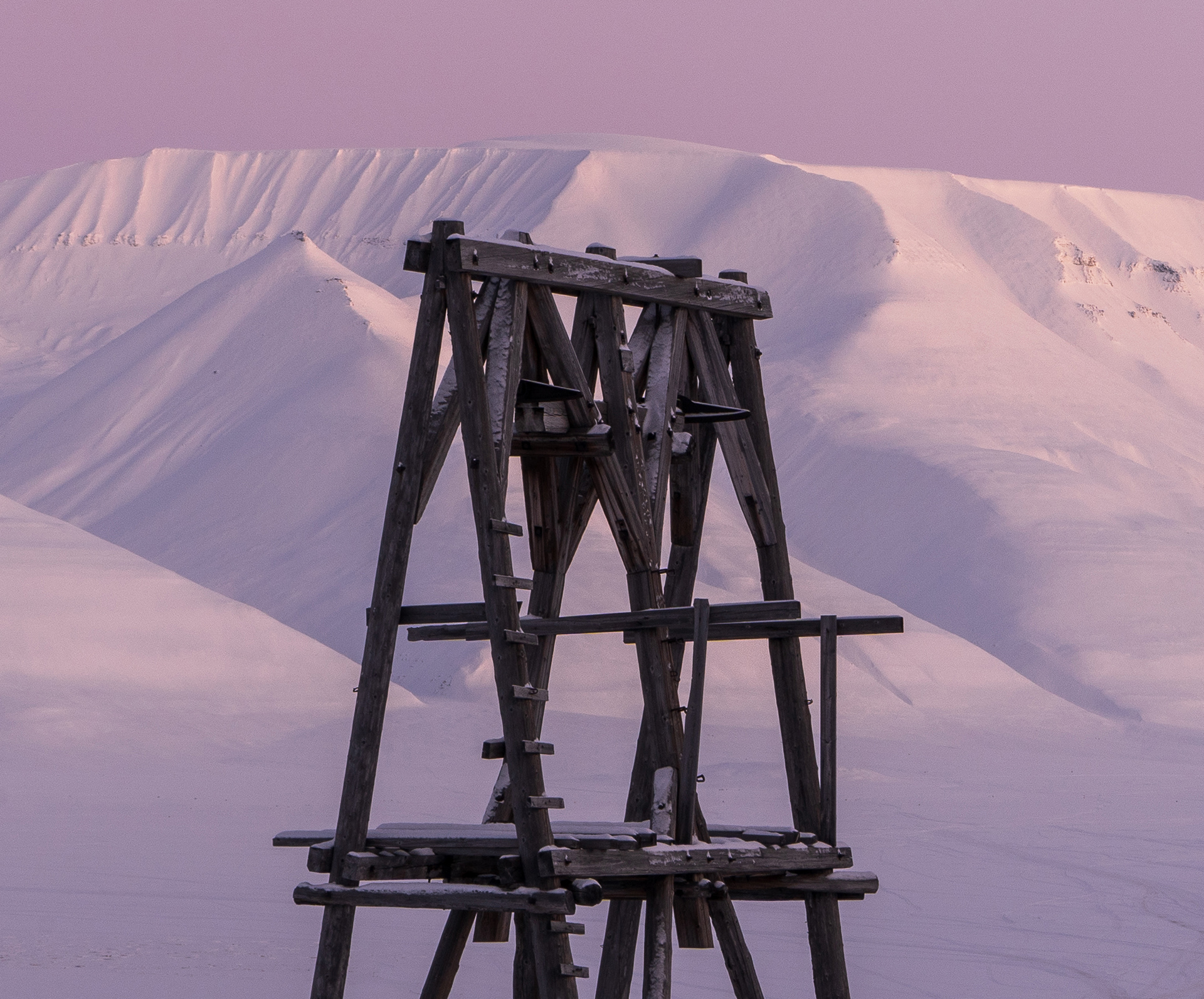
A close up of the cable car towers - fairly intricate structures made of timber imported over thousands of kilometres away from mainland Norway, against a backdrop of the pristine pastel landscape. A juxtaposition of the fragile landscape and the human intervention over the last century.
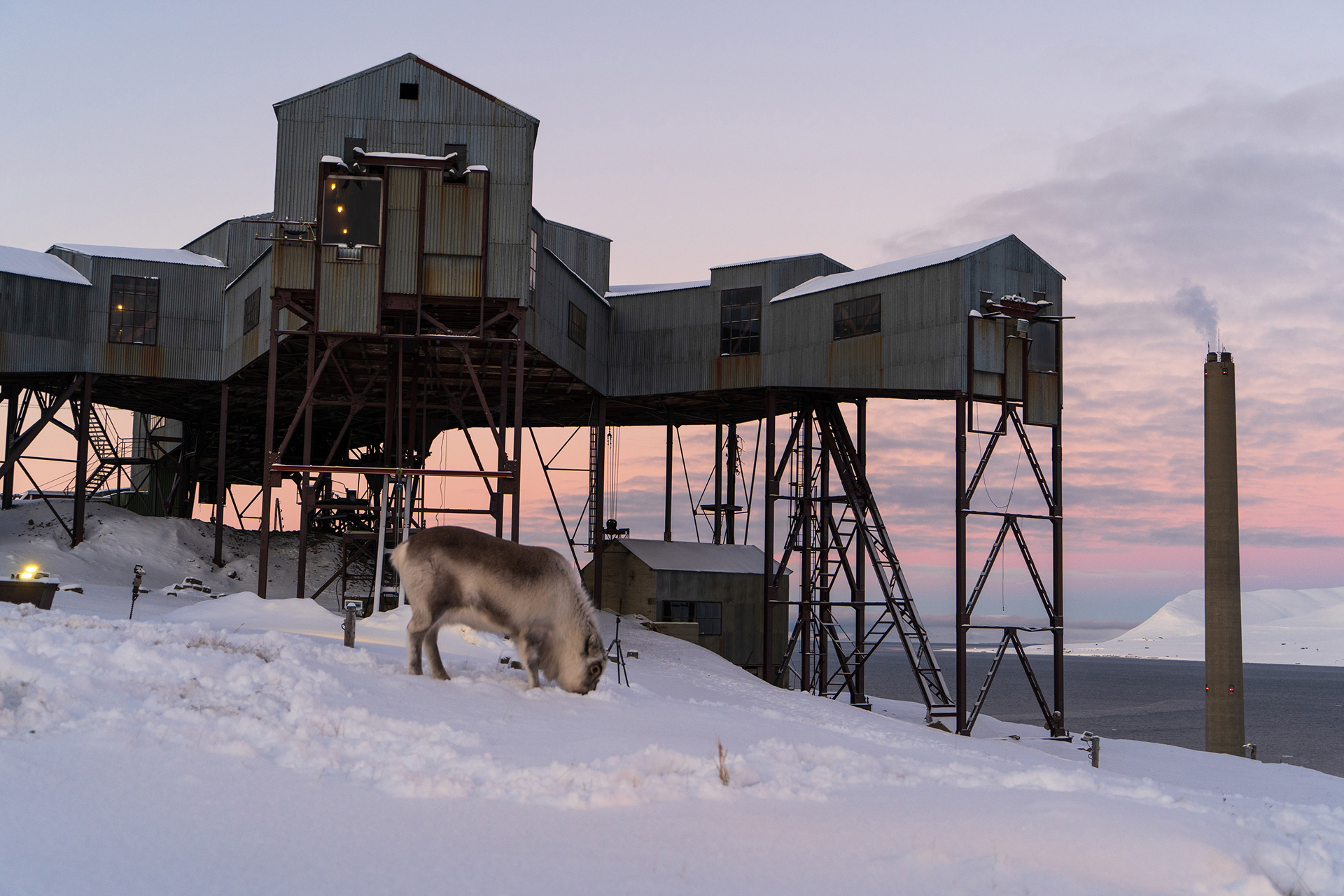
Ever since the cable car network was decommissioned in 1987 in favour of advanced lorries, this corner of Longyearbyen has been quiet, for the lack of rattling emerging from the Cable Car Centre. Local wildlife now frequents this hilltop in search of untouched grasses buried under the snow - a welcome, surprise model for my photoshoot.